
Neng Yen
Wechat: alexliao1027
Taiwanese Traditional Culture: Temples, Puppet Shows, Night Markets
The following red characters are the parts for the on-site interview in Taiwan in January 2025.
Contents
1.The temple culture of Taiwan
The historical background of temples in Taiwan – Where did the earliest temples come from?
An overview of the number of religious buildings in Taiwan
The religious significance of Mazu temples in Taiwan
Introduction to Cifu Palace in Tianwei, Erlun, Yunlin – Reasons for choosing this temple
The reconstruction of Cifu Palace
Future plans for Cifu Palace:
On-site in-depth investigation: Cifu Palace in Tianwei, Erlun, Yunlin, Taiwan
2.Taiwanese Puppet Show
What is Puppet Show
The Origin of Taiwanese Puppet Show
The Historical Evolution of Taiwanese Puppet Show in Different Eras
The Popularity of Puppet Show in Taiwan
The Yunlin County Government’s Emphasis on the Traditional Culture of Puppet Show and Its Measures for Inheritance
The Puppet Show Museum – Its Origin
The Puppet Show Training Center (the largest in Taiwan)
The International Puppet Festival and Spontaneous Puppet Shows by Folk Groups
On-site Interviews of Puppet Show-related Industries – On-site Interview of Puppet Carving
Open Visits to the Puppet Show Studio of Puppet Show Troupes
3.Night Market Culture in Taiwan
Where Do Night Markets Come From?
The Evolution of Night Markets
Traditional Taiwanese Cuisine –
The Origin of Braised Pork Rice
Braised Pork Rice: A National Vote
Different Traditional Delicacies in Various Regions
On-site Investigation of the Current State of Local Night Markets
———————————————————————
Taiwanese Traditional Culture: Temples, Puppet Shows, Night Markets
Historical Background of Temples in Taiwan
The earliest temple in Taiwan is the Kau Kei Tianhou Temple, located in the Beishan District of Tainan City. After Zheng Chenggong captured the Dutch fortress of Provincia in 1662, he renovated the ‘Matsu Laozi’ at the mouth of Deqing Creek into this temple, which was then known as the ‘Original Matsu Temple’. The bricks used to build the temple were transported by his second fleet from Xiamen to Taiwan. Inside the temple, there is a Matsu statue carved in 1640, which came to Taiwan with Zheng Chenggong’s fleet, hence it is referred as ‘Ship Mama’ in traditional culture. Subsequent temples in various regions also emerged due to the integration of early Han Chinese immigrants (1700s) and indigenous peoples. Over time, from the Qing Dynasty (1636-1911) to the present, the number of temples has continued to grow with population increase and social changes.
Overview of Temples and Their Numbers in Taiwan:
According to a 2021 survey by the Institute of Sociology at Academia Sinica, 27.9% of Taiwan’s population adheres to traditional folk religions, 19.8% to Buddhism, 18.7% to Taoism, while the remaining population mainly follows Protestant Christianity (5.5%), Unification Church (2.2%), and Catholicism (1.4%). Over 80% of Taiwanese people consider themselves religious.
According to data from the Fair-Trade Commission, there are approximately 12,000 chain convenience stores (such as 7-Eleven, Family Mart, and Hi-Life) across Taiwan. In contrast, the total number of registered churches and temples is 15,186, not including unregistered religious sites. Calculating this, in Taiwan’s total area of over 36,000 square kilometers, there is a temple or church on average every 2.4 square kilometers. Such a high density of religious buildings is probably quite rare.
Taiwan, with a population of about 23.5 million, is a multicultural society with various religious beliefs. Different religions coexist harmoniously, and people respect each other. Below, I will briefly explain the number of religious buildings for Taiwan’s three major religions (Buddhism, Taoism, and Christianity) respectively.
1. Buddhist Temples
Buddhism has deep roots in Taiwan, with a considerable number of temples. According to official statistics, there are approximately 4,000 Buddhist temples in Taiwan currently, mainly concentrated in the northern region and the Penghu Islands. Famous Buddhist temples such as Kaohsiung’s Fo Guang Shan, Dharma Drum Mountain, and Ci Ji Temple are all hotspots for believers’ pilgrimages.
2. Taoist Temples
Taoist temples are another important religious belief in Taiwan, with a number of approximately 6,000 according to statistics. These temples usually worship various deities such as Mazu, the Earth God, the God of Wealth, Guan Yu, and the City God. Their functions are not limited to religious activities but also serve as important venues for community gatherings. Famous Taoist temples such as Taichung’s Dajia Zhenlan Palace, Beipu Chaotian Temple in Beigang, Baishatun Tian Shang Mu Temple, and Maotou Dai Tianfu attract a large number of believers to visit for worship.
What is particularly noteworthy is the Beigang Mazu Temple’s procession activity in Dajia, Taichung County, central Taiwan. This procession is one of Taiwan’s most famous traditional cultural events. I will briefly describe it to give you an idea of its grandeur. The annual procession, held every March, attracts a large number of believers and tourists, with participation figures exceeding one million per year according to statistics. It is a large-scale event lasting nine days and eight nights, primarily conducted on foot, covering a distance of over 340 kilometers. Participants follow the Mazu palanquin from the Beigang Mazu Temple in Taichung’s Dajia to various temples in different towns and villages along the way for worship. The route goes south from Taichung, passing through Changhua County, Yunlin County (my hometown), and finally reaching the Fengtian Palace Mazu Temple in Chiayi County.
The spectacularly huge crowd also passes by my family’s doorstep in Yunlin, then proceeds to Tienwei Cifu Palace, a temple not far from my home, where they rest briefly before continuing. In villages along the procession route, every household sets up tables at their doorsteps, placing offerings and providing free drinks and food for the procession participants. Finally, the procession turns back from the Fengtian Palace Mazu Temple in Chiayi, again walking on foot back to the main temple in Beigang, Taichung. The significance of the procession lies in Mazu’s symbolic role in praying for favorable weather, driving away evil spirits, calming the people’s minds, and ensuring the safety of the populace as she passes through various regions and villages.
In addition to its significance of being passed down through generations, traditional parades also serve to comfort people and foster unity. Participants, regardless of age or gender, follow Mazu on long journeys with their own feet, using this act to express gratitude and pray for happiness. Although each person’s motivation may differ, their sincere intentions are universally connected. The meaning of the parade has now transcended a mere cultural activity; it has also become a social event that connects the community. Through this activity, people find release and have their hearts consoled, gaining strength to dispel doubts and anxieties. This is likely why the number of participants increases every year.
It’s like a large marathon that requires not only physical stamina but also support for traditional culture. Foreign friends are also attracted by this lively and united atmosphere, coming to visit and experience it. The Mazu Grand Procession is not only Taiwan’s most important cultural event but has also been likened to one of the world’s three major traditional cultural activities, alongside Vatican Christmas Mass and Muslim Hajj in Mecca, by international media such as Discovery Channel. It was also listed as one of the World Intangible Cultural Heritage by UNESCO in 2009. Apart from having over a million participants, the various business opportunities and economic benefits along the route are estimated: the amount of food and drink provided free of charge by believers along the way exceeds NT$100 million, and charitable donations collected over 9 days have exceeded NT$20 million. Many foreign media outlets, news reporters, and famous YOUTUBERS have specifically come to Taiwan to experience it, making it an indispensable large-scale traditional cultural event for Taiwan.
3. Christian Churches
Although the population of Christians in Taiwan is smaller compared to Buddhists and Taoists, the number of their churches is also growing gradually. Currently, there are approximately 2,500 Christian churches in Taiwan, mainly distributed in urban areas. These churches not only provide religious ceremonies but also serve as centers for community public welfare activities.
From the above numbers of religious buildings, Taoism remains the most prevalent in Taiwan. Therefore, I will introduce the culture of traditional Taiwanese religious temples through my family’s faith temple, ‘Tianwei Cifu Palace’.
The reason for choosing Cifu Palace: Why was Cifu Palace selected instead of other temples for description? It is mainly due to the deep affection I have for my hometown’s temple (Tianwei Cifu Palace). When I was a child, I lived separately from my parents, who worked in Shanghai, and I was raised in the countryside of Taiwan by my grandparents. My grandfather was responsible for the reconstruction and renovation of the old Tianwei Cifu Palace in the village. So, my grandfather was either at the temple or on his way to it every day. Since the temple was very close to our old house, he often took me to play there and explained to me a lot about the cultural history of the temple and many interesting stories that happened during the reconstruction. Our family also received much care from the temple and the deities in an intangible way. Over time, my understanding and feelings for the temple became deeper and deeper.
In addition, my family has a deep connection with this temple. Over 270 years ago, in the eighteenth year of the Qianlong era (1753), my great-great-grandfather was one of the organizers and among the elders who donated the most when the earliest existing temple was being renovated and refurbished, as recorded on the stone tablets in the photo wall (such as the one inscribed with Liao Tai’s name). Later, my grandfather’s father (my great-grandfather) was also one of the main committee members managing the temple. Then, my grandfather was assigned by the villagers and the deities to take on the heavy responsibility of rebuilding the new temple. My grandfather said he was at a loss and didn’t know what to do, as he had never been involved in temple construction before. How should the new temple be rebuilt? Who should be hired to build it? How to design it? Where to buy the building materials? And most importantly, where would the huge construction costs come from? He remembered that his grandfather once checked the temple’s finances and found the total cost was only a mere NT$200,000 or so. At that time, an average car in Taiwan cost NT$700,000 to NT$800,000. Grandfather was worried: building a temple would cost at least several million NT dollars; how could this small amount of money be enough? But after receiving instructions from the deities, my grandfather was told not to worry, as the deities would naturally guide him on what to do, and donations from all sectors would flow in continuously. Initially, my grandfather was skeptical, but during the process of starting to build the temple, people often came forward voluntarily with large sums of money to donate for the construction. By the time the new temple was completed, the total cost was about NT$70 million, with a remaining balance of over NT$2 million, which was truly incredible. Part of this surplus was used to help the poor and vulnerable families in the village, a kind act that moved everyone. The deities truly chose the right person. (As shown in the photos, the stone tablets on the temple wall record the history of my grandfather and the villagers uniting to rebuild the temple.)
My father also carried forward the glory of the ancestral temple. During his studies in Tokyo, Japan, he often helped promote the temple’s history there. He once represented Cifu Palace and led temple staff to pay homage at the Tianhou Temple (Mazu Temple) in Yokohama, Japan. During his university years, he also brought Tokyo university professors to our Tianwei Cifu Palace to learn about the temple’s construction process and pay homage. In August 2024, my father also brought the editor-in-chief of a Japanese news agency to visit Cifu Palace. My grandfather gave a lecture on the circumstances of the temple’s construction back then and introduced various traditional arts within the temple, such as carvings, poems, and murals (as shown in photos). He also hoped the editor-in-chief would write an article about the temple to help more people understand its hard-won significance.
Thus, from our ancestors, through my great-grandfather, grandfather, father, to me, we have an inseparable connection with Cifu Palace. As time passed and I grew up, I felt that Cifu Palace has blessed each generation of our family. Shouldn’t I also do something for this temple that has always taken care of us? On several occasions, when writing essays for school in Shanghai’s Taiwan School or representing the school in essay competitions, I wrote about the stories and details of Cifu Palace in my Taiwanese hometown. Everyone found it very interesting, and I won awards for vividly describing it (as shown in the attached certificate: Selection Award for the Cross-Strait Art New Horizons Forum). To introduce my hometown’s temple more deeply, I needed to understand its various aspects more thoroughly.
So, during my annual winter and summer vacations back to Taiwan, I often went to the temple to help out—for example, participating in temple promotional activities as a promotional ambassador (as shown in attachments), assisting in exchanges between temples, and helping visitors learn about the temple’s history. Through these meaningful activities, I gained a deeper understanding of many different aspects of the temple.
In the past, when visiting an ancient temple, I often wondered about the historical and temporal context in which it was built a hundred years ago, what events people encountered back then. The hardships, joys, and even miracles they experienced are difficult for us to truly feel or imagine. Even after reading historical and cultural materials, it’s hard to fully immerse oneself in that era. But when I look back at myself now, I am not living in that time? Let me think—perhaps people hundreds of years from now will also want to know my personal feelings and experiences today. Therefore, by vividly describing these scenes, allowing future generations to understand, I believe this is a meaningful thing to do.
Future Plans for Cifu Temple:
A Charity Website Named After the Temple: To engage in charitable acts through action to help disadvantaged students and inspire more people to do good, promoting the religious doctrine of encouraging kindness, fostering good thoughts, and refraining from evil deeds.
How to Act: For example, organizing fundraising activities. Regardless of the amount raised, donations will be made under the name of Cifu Temple to Erlong Elementary School in the hometown for their own use—whether it’s buying a few more books for the library for students to read or providing tuition subsidies for students from disadvantaged families with larger amounts.
Regarding the religious doctrine, the main deity enshrined at Cifu Temple is Mazu, who is widely worshipped by Taiwanese people. Mazu is known for helping those in need and eliminating disasters and misfortunes for others. However, she also punishes those who do evil, with the purpose of encouraging people to refrain from evil deeds, as \”the heaven sees what humans do.\” These doctrines need to be promoted through modern internet publicity. If this can reduce the occurrence of bad behaviors, it would be an immeasurable merit. I hope that more people can see this, and every additional person who understands and spreads this spirit is valuable, allowing this spirit to spread and enabling mutual help among people.
Based on the spirit of charity, during my study period at a school in Shanghai, I have also put this into practice with my meager efforts to promote traditional cultural virtues and engage in charity, such as participating in charitable fundraising to help disadvantaged groups, asking passersby on the street to assist children with autism (as shown in the attached materials), and serving as a volunteer teacher to teach in remote and impoverished areas of Guizhou Province in China, sharing the knowledge we have learned and helping students in remote mountainous areas (as shown in the attached materials).
Field Visit: Visiting Tianwei Cifu Temple in Erton Township, Yunlin, Taiwan
2. Puppetry Culture of Taiwan:
What is Puppetry?
I believe many people, especially today’s youth, have only a vague understanding of puppetry. How does it look? How is it manipulated? What makes it interesting… Let me explain briefly first.
First, looking at its appearance: the head is a hollow wooden puppet head carved internally. The body part is a traditional costume worn over the wooden neck, with the inside of the costume also hollow to allow hands to be inserted. When manipulating, hands are inserted into the costume, and the index finger is placed into the hollow puppet head. The thumb and other fingers control the puppet’s left and right hands respectively. After becoming familiar with manipulation, more complex performances can be done, such as backflips, or wielding swords and engaging in ‘battles’ with another puppet. Some intricately crafted puppet heads have movable eyes that blink and mouths that open and close. For special effects, small mechanisms may be installed in the mouth to produce fire-spitting or blood-spraying effects. Tubes and lights attached to the palms can emit colorful smoke and qi gong effects, which, combined with stage lighting and music, create a highly impressive and entertaining experience.
In terms of development across Asia, Taiwan has the most vibrant puppetry scene. Puppetry in Taiwan is closely related to traditional cultural dramas, relationships with heaven, earth, gods, and humans, economic seasons, creative cultural values, skill inheritance, and even modern international puppetry cultural exchanges.
Historical Evolution and Performance Style Changes of Puppet Theater:
Puppet theater was introduced to Taiwan from Quanzhou, Zhangzhou, Chaoshan, and other regions in southern Fujian during the mid-Qing Dynasty, with a history spanning over two centuries. Taiwan has preserved traditional techniques and the local Fujian dialect (Holo language), providing an ideal environment for research and performance. This is the main reason why puppet theater has thrived and been passed down through four to five generations.
In the 1750s, a large number of Han Chinese immigrants, particularly from the Minnan region of Fujian, settled in Taiwan, bringing puppet theater with them. The plays were mainly based on ancient books and vernacular novels, known as ‘gushu xi’ (novel-based plays). The dialogue was elegant and rich in poetry, emphasizing meticulous movements, with accompaniment primarily consisting of Nanguan (Southern music) and Beiguan (Northern music).
In the 1920s, martial arts-themed puppet theater gradually developed among the people. Its main difference from traditional puppet theater lay in the plot, which often adopted newly written martial arts novels from the late Qing and early Republican periods, such as ‘Qi Xia Wu Yi’ (Seven Heroes and Five Gallants) and ‘Xiao Wu Yi’ (Little Five Gallants). Focusing on showcasing various unique sword techniques and martial arts skills, it was called ‘jianxia bujuxi’ (sword hero puppet theater). Representative figures of this style included Huang Haidai of Wuzhouyuan and Zhong Renxiang of Xinxingge.
The 1930s marked Taiwan’s period of Japanese colonial rule (1895-1945). The Japanese officials of the Taiwan Governor-General promoted the ‘Kamikaze Movement’, leading to changes in puppet theater. Traditional Beiguan gongs and drums were banned, replaced by Western music; puppets wore mixed Chinese and Japanese costumes; scripts were changed to Japanese ones; puppets were styled after Japanese attire, and performances were conducted in Japanese. Although this ‘kamikaze puppet theater’ was not accepted by the Taiwanese public due to linguistic and cultural barriers, some of its performance techniques influenced later Taiwanese puppet theater, including music and stage settings.
In the 1950s, after World War II, Taiwanese puppet theater began to develop in outdoor ‘yetai’ (open-air) performances across central and southern Taiwan. While continuing the martial arts content from the 1920s ‘jianxia’ era, new plots and protagonists were also created. Additionally, dramatic techniques outside the play itself began to adopt elaborate stage sets, glittering costumes, and eye-catching lights or special effects to enhance combat scenes.
After entering Taiwan, puppet theater underwent significant changes due to political shifts, economic development, foreign cultures, social customs, and technological progress, differing greatly from its original form originating from mainland China.
In 1947, following some political incidents after the Kuomintang government led by Chiang Kai-shek arrived in Taiwan, the government became sensitive to public gatherings, imposing martial law and banning outdoor puppet performances. To survive, puppet theater operators were forced to switch to indoor performances. Thus, this folk art, originally performed outdoors before temples to thank the gods, transformed into a commercial performance requiring ticket sales for indoor audiences.
The 1960s marked the heyday of traditional Taiwanese puppet theater, also known as ‘Jinguang Bujuxi’ (Golden Light Puppet Theater). It shifted from outdoor performances to indoor stages, with the survival of troupes entirely dependent on box office performance. Therefore, plots, puppets, and stage effects began incorporating striking elements. Black vinyl records (the earliest music playback method) replaced traditional live gong and drum accompaniment. Extensive use of Eastern and Western music, film scores, and other elements greatly enhanced the overall dramatic effect, adding more vivid audio-visual stimulation through music. This became a unique development of Taiwanese puppet theater. Different troupes created distinct plays and protagonists. The main forces that popularized Jinguang Puppet Theater were the ‘Wufei Wuzhou Pai’ (Wufei Five Continents School) from Hubei Town, Yunlin County, and the ‘Xiluo Xinxingge’ (Xiluo New Prosperity Pavilion) from Xiluo Town, Yunlin County, the two largest schools in Taiwan and the most prolific performers of indoor theater. Later, Chen Junran from Nantou County’s Nantou New World added more diversity to Jinguang Puppet Theater. Thus, Yunlin County is regarded as the hometown of Taiwanese puppet theater.
In the early 1960s, puppet theater performances were quite common in movie theaters, and the wild-stage golden-light puppet theater remained one of the important entertainments in rural areas. What made Taiwanese puppet theater popular was the development of television. In November 1962, Taiwan Television Company (TTV), the only wireless TV station in Taiwan at that time, broadcast a documentary film featuring Li Tianlu’s Yi Puppet Theater performing *Romance of the Three Kingdoms*. This marked the first time puppet theater appeared on a television program in Taiwan.
In April 1965, the company also invited another puppet theater troupe, Ming Xu Shi Puppet Troupe, to perform the fairy tale *Shui Xian Gongzhu* with Mandarin dubbing, officially staging the first ‘television puppet theater’ performance. Although Li Tianlu took the first step in bringing puppet theater to television, the general public generally believed that the key figure who truly enabled puppet theater to enter the small TV screen was Huang Junxiong, who brought ‘golden-light opera’ to television.
Who is Huang Junxiong? He is the son of Huang Haidai, the founder of Yunlin County Hubei Wuzhou School Puppet Theater, one of the largest troupes in Taiwan at that time. As early as the early 1960s, Huang Haidai gradually handed over the leadership to his sons Huang Junqing and Huang Junxiong. Among them, Huang Junxiong’s innovations in puppetry, sound effects, and music made him a leading figure in indoor puppet theater.
In March 1970, Huang Junxiong’s Zhen Wuzhou Troupe premiered *Yunzhou Da Ruxia* (The Great Scholar of Yunzhou), an indoor puppet plays originally screened in theaters, for the first time on a Taiwanese TV station. Due to its novel music, elegant narration, tight plot, and stunning sound and light effects, it was continuously broadcast for 583 episodes over the next four years. Moreover, it once achieved an unprecedented TV viewership rate of 97% across Taiwan, a record that remains unbroken to this day.
In 1973, the government began requiring puppet theater to switch to Mandarin dubbing under the pretext of promoting Mandarin.
In June 1974, the government banned television stations from broadcasting Yunzhou Great Scholar Hero and all puppet shows, citing reasons such as ‘promoting the national language’ and ‘disrupting the normal work and rest of farmers and workers.’ The rationale was that Huang Junxiong’s TV puppet shows often kept people glued to their TV sets, forgetting their regular work. Students even frequently arrived late for class because they were so engrossed in watching TV puppet shows during lunchtime, affecting their classes.
In the years following 1974, the Taiwan News Bureau continued to restrict the broadcast of TV puppet shows. However, due to public opinion and commercial needs, the government gradually began to open up limited time slots on the three existing over-the-air TV stations starting in 1981 for puppet show performances. Nevertheless, strict restrictions remained: only one TV station could broadcast at a time, and it was required to use Mandarin Chinese dubbing instead of Hokkien.
However, as language evolves with the times, when reciting the essence of classical poetry in puppet show dialogues using Mandarin, the tones (level and oblique) are relatively flat, and the phonetic harmony is less pleasant, making it difficult to integrate with the original overall performance atmosphere. This instead caused a further loss of audience.
In the mid-1980s, Huang Junxiong of the True Wuzhou Garden Opera Troupe gradually passed the baton to the third generation: Huang Wenze, Huang Qianghua, and Huang Wenyao. Among them, after Huang Wenze and Huang Qianghua took over their father Huang Junxiong’s series Yunzhou Great Scholar Hero, they pioneered the later highly acclaimed ‘Pili Puppet Show’. However, starting from the 1980s, although puppet shows could resume broadcasting, due to various restrictions and censorship imposed by the government on performance content at that time, a large number of fans and audiences were lost. Therefore, from 1988 onwards, the performance focus of all TV puppet shows shifted to the video rental market and stage performances (both indoor and outdoor stages).
The TV puppet show era was the stage where modern puppet shows had the deepest impact on Taiwan. Not only did it achieve an extremely high viewership rate of up to 97%, which became a social topic for a time, but many characters from the show still influence the living habits of Taiwanese people today. For example, Baqiong, the filial daughter who imitates puppet show characters and is played by real people in reality, is still a common ritual role in some Taiwanese folk Taoist funeral ceremonies.
Another example is that if a political figure is manipulating events behind the scenes, Taiwanese public opinion will refer to this person as ‘Cangjingren’ (a main character in the show). Additionally, someone with a dual personality, sometimes good and sometimes bad, unpredictable, and loved and hated, like Heibai Langjun, has also become a synonym and adjective. However, Baqiong, Cangjingren, and Heibai Langjun are just some of the characters from the TV puppet shows of that time.
In the late 1980s, due to the government’s significant relaxation of foreign media restrictions, which increased audience choices, the development of traditional Taiwanese puppet theater (Buddha’s Hand Puppetry) gradually came under the influence of entertainment cultures introduced from outside Taiwan. The number of outdoor wild-stage puppet troupes shrank from over a thousand at their peak to around three hundred, with many of these being nominal troupes that did not actually perform.
With fewer audiences, even puppet troupes with dedicated backstage facilities saw a sharp decline in performance opportunities, and their operations often resulted in deficits. Despite this, some enthusiastic individuals worked hard to preserve the precious traditional Taiwanese puppet culture through school clubs and similar forms. Traditional puppet artists such as Li Tianlu and Zhong Renbi made significant contributions in this regard. Zhong Renbi of Xinxing Pavilion was even formally invited to teach ‘Puppetry Skills’ at universities, setting a precedent for Taiwanese troupes.
In contrast to the significant decline in audiences for traditional indoor and outdoor puppet troupes in Taiwan, TV puppet theater achieved greater progress in the 1980s.
In 1988, Huang Wenzhe and Huang Qianghua, two brothers who encountered bottlenecks in the development of wireless television, used Meidi Ge Broadcasting and Television Program Production Co., Ltd. as a stepping stone to enter the VHS tape rental market. They released the ‘Pili’ series of puppet plays, primarily for rental. The troupe strengthened its efforts in camera movement narrative techniques and professional scriptwriting in video drama production, resulting in approximately one million regular tape rental viewers for the puppet series, accounting for 10% of Taiwan’s total audiovisual rental rate.
After the 1990s, several puppet theater troupes also successively emulated the aforementioned practices. In 1993, Pi Li also established Taiwan’s first independent television station centered on puppet theater broadcasting, \”Pili Satellite Television.\” Its business model involved airing rental/sold puppet theater video tapes that had been taken off mainstream channels after a certain period on this channel. Apart from promoting traditional puppet theater to media such as CDs and cable television, Taiwanese puppet theater also attempted to enter the big screen. The most famous among them is the 1997 film \”Legend of the Holy Stone, \” which not only won the Best Local Film in Taiwan in 2000 but was also exported to the United States and Japan afterward. My father also mentioned that he saw large promotional posters for Taiwan’s puppet theater \”Legend of the Holy Stone\” on the walls of a movie theater building in Shinjuku Kabukicho, Tokyo, which were about 3-4 stories high with impressive lighting. Although traditional puppet theater had declined at this stage, correspondingly, television puppet theater, which had improved production standards and quality, increased the audience for puppet theater through audio-visual media such as video tapes, VCDs, DVDs, and cable television.
By 2005, the overall output value of Taiwanese television puppet theater had risen to over 40 million US dollars, with over one million audio-visual rentals, and cable television households reaching over 3.5 million. Moreover, various derivative products and performances based on puppet theater have even become a trend in Taiwan, such as cosplay activities often found at doujinshi sales events featuring puppet theater characters.
The Yunlin County Government has shown considerable dedication to valuing the traditional culture of puppet theater and preserving and passing it down, as follows:
Introduction to the Tiger Tail Puppet Theater Museum – The Origin of the Building
Location of the Museum:
The Yunlin Puppet Theater Museum was originally the building of the Tiger Tail District Office during the Japanese colonial period in Taiwan. The Tiger Tail District was established after the reform of local government system in 1920 (Taisho 9) in Japan. The building was completed in 1922 (Taisho 11). It had been under the administration of 12 district magistrates (local officials) and served as the center for administrative and police affairs at that time, so there was also a prison inside the building for guarding and detaining prisoners.
Until the early 1980s (1989), when the new building of the Tiger Tail Police Substation was completed, the building fell into disuse due to the relocation of the police station.
In 1997 (the 8th year of the Republic of China), Yunlin County held the National Arts Festival in Tiger Tail Town. In addition to integrating various important cultural and historical characteristics of Tiger Tail, such as sugar factory industrial culture and puppet theater performance art, the value and preservation of the originally idle old district office building emerged as a opportunity.
In January 2005 (the 94th year of the Republic of China), domestic puppet theater professionals were invited to hold a symposium to provide guidance on display design and operation. After securing funding from the Cultural Construction Council, an online bidding process was initiated.
In April 2007 (the 96th year of the Republic of China), the display design was completed and accepted. In November of the same year, it was officially opened as a puppet theater introduction museum, coinciding with the International Puppet Festival, utilizing the preserved historical building of the Tiger Tail District Office for reuse. The Yunlin Tiger Tail Puppet Theater Museum was formally inaugurated.
(Source: Planning Report of Hugui Town Puppet Theater Themed Museum / Yunlin Puppet Theater Museum Fans HP)
A puppet theater training center under construction near Yunlin High-Speed Rail Station
The foundation stone for the 2021 Puppet Theater Training Center was laid, marking the largest engineering project to break ground in Yunlin. Spanning 2.5 hectares (approximately 3.5 standard football fields), this landmark facility, costing over NT$1 billion, is set to be completed by the end of 2026. It will be Taiwan’s first international-level research center dedicated to puppet theater, integrating a training academy, performance venue, arts festival, experimental space, and research hub to explore the future of puppet theater art.
I will also visit this training center.
The hosting of the International Puppet Festival
The Yunlin International Puppet Festival is a classic arts festival in Taiwan, now in its 22nd edition, having accumulated significant local energy over the years.
County Magistrate Chang Li-shan has led the Yunlin International Puppet Festival onto the world stage. The iF Design Award ceremony in Germany was glittering.
When news came in 2024 that the festival had once again won the iF Design Award, Magistrate Chang Li-shan specially led the county government team to Berlin’s Friedrich Wilhelm Theatre to attend the iF Design Award ceremony. To date, the main visual design and activities of the Yunlin International Puppet Festival have achieved remarkable results in international award competitions within a short period, winning 2 German iF Design Awards and 9 international awards including 6 silver and 1 bronze, demonstrating strong design capabilities. The Cultural and Tourism Bureau has won a total of 43 international major awards to date.
Open visit to the photography studio of the puppet theater troupe
———————————————————————————–
Taiwan’s Night Market Culture
Taiwan’s night market culture is world-famous, almost synonymous with Taiwan’s tourism. With a history of over 100 years, its origins can be traced back to Chinese cultural history during the Ming and Qing dynasties. At that time, ports such as Taipei’s Tamsui and Tainan’s Anping in Taiwan had frequent commercial exchanges and heavy foot traffic, leading to the formation of markets. During the Japanese colonial period (1895-1945), people found that activities near Japanese temples were less restricted for gatherings. Thus, while visiting temples, groups of three or five would gather to enjoy delicious food, chat, and discuss social dynamics, once again forming Taiwan’s distinctive cultural markets.
Taiwanese night markets are renowned for their Taiwanese street snacks. Typically, small tables and stools are set up by the roadside for on-the-spot enjoyment, or the food can be packed to take away.
While snack trends update quickly, some highly distinctive and popular snacks remain ever-present, such as Taiwan’s most traditional and internationally famous braised pork rice, oyster omelette, crispy chicken patty, grilled sausage, grilled corn, rice blood cake, pearl milk tea, taro balls, shawarma, stinky tofu, and so on.
Some cities or specific night markets are famous for certain snacks, such as Tainan’s danzai noodles and coffin-shaped pan cakes.
Currently, there are approximately 300 night-markets distributed across counties and cities in Taiwan. According to an online poll conducted by Taiwan’s Tourism Bureau in 2010, the top five night markets in Taiwan are Kaohsiung Liuxing Night Market, Taipei Shilin Night Market, Yilan Luodong Night Market, Tainan Garden Night Market, and Taichung Fengjia Night Market.
Taiwanese night markets mainly fall into four forms:
1. Tourist Night Markets: These are original street night markets that have been guided by relevant government agencies to be transformed into neat and well-planned tourist areas, integrated with local characteristics to become night markets for tourism and leisure.
2. Street-type Night Markets: Also known as business district-type night markets, these are mostly extensions of existing commercial areas operating until late at night. Merchants usually have their own stores or rented shops, and also attract vendors to set up stalls on the roadside. Night markets in metropolitan areas often fall into this category of business district night markets.
3. Mall-type Night Markets: Night markets concentrated within large buildings.
4. Mobile Night Markets: These are mostly operated in urban vacant lots or suburban areas, which may serve as parking lots on regular days and only operate on specific dates (e.g., every Wednesday and Friday). All merchants are in the form of vendors, arriving at the site in the evening and completely dismantling after midnight. The mobile nature of mobile night markets allows night markets to move around various towns and villages. For major metropolitan areas such as Taipei, Taichung, and Kaohsiung regions, mobile night markets were previously called commercial exhibitions, indicating the display of commercial products. Now, people commonly refer to them as night markets, and the term ‘commercial exhibition’ has gradually been replaced by ‘night market’.
This time, I will go deep into understanding the mobile night market as mentioned in point 4 above.
Location: Tiger Tail, Six Lo, Dou Liu night markets in Yunlin, Taiwan.
Research Focus:
– What are the income sources of night market operators?
– How many people flow into each night market? What is the total turnover?
– What is the average consumption per person? What is the proportion of food delivery now? Which delivery service providers are there?
– What problems do night market vendors encounter? How to solve them?
The purpose of this study is as follows:
1. To study the history and changes of various night markets.
2. To investigate the consumption patterns of night market customers.
3. To analyze the influencing factors of the consumption motivation of night market customers.
Research Questions: The specific research questions of this study are as follows:
– What is the consumption pattern of night market customers?
– What is the gender distribution of the customer group?
– What is the age distribution of the customer group?
– Which counties/cities do the customer group reside in?
– What types of stalls do customers consume from?
– What transportation means do the customer group use?
– What factors influence the consumption motivation of night market customers?
– What factors cause distress during consumption?
– What factors influence customers’ choice of night markets?
– Does the bandwagon effect influence customers’ consumption motivation?
– Do specific products influence customers’ consumption motivation?
– Do transportation factors influence customers’ consumption motivation?
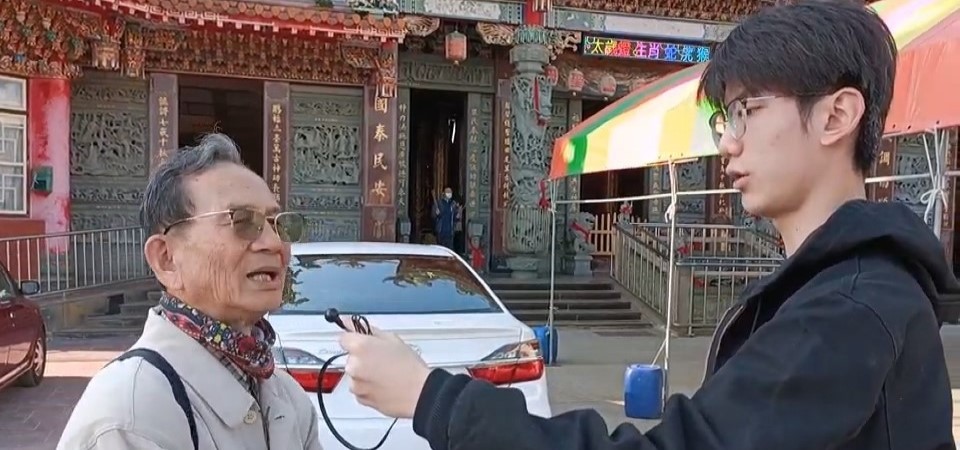
2025.1. Return to Taiwan for Interview
The following is the text content of the interview regarding the master puppeteer Hsu Chien-Chang, night market interviews, and the reconstruction of Cifu Temple:
On the morning of January 25th, ‘The Home of Puppets’ Puppetry Master Hsu Chien-Chang’s interview video:
(13:20 long video) Today we are fortunate to have Master Hsu from ‘The Home of Puppets,’ a place of puppetry. Today we come to interview the master. First, we would like to ask the master about the history and origins of Taiwanese puppetry.
In fact, what makes Taiwanese puppetry very special is that it did not originally appear in Taiwan but came from mainland China. It emerged around 300 years ago, invented by a man named Liang Binglin. It is said that Liang Binglin’s lifelong ambition was to become the top imperial examinee (Zhuangyuan), but no matter how he tried, he never succeeded.
Before one examination, a friend suggested they go to Xianggong Temple to pray. Liang Binglin agreed and went to the temple with his friend to pray for success in the exam and becoming Zhuangyuan. After praying, that night, Liang Binglin had a dream where a deity appeared and approached him, placing a hand on his shoulder and saying, ‘Young man, your glory lies in your palm!
Upon waking, Liang Binglin was overjoyed, convinced he would definitely pass the exam this time. However, he still failed and fell deeply disappointed. He prepared his luggage and ready to return home to farm instead of taking the exam anymore. At that time, he had run out of money. What could he do? A scholar going begging was unthinkable, so he thought of a solution: since most people in ancient times were illiterate, he could go to temple gates to tell stories and teach people to read, so people would give him tips and pocket money, allowing him to return home. He lived this way day by day.
Once, passing a temple, he noticed someone telling stories even more brilliantly using puppet theater. He thought the puppet performers were amazing, but traditional puppetry was controlled by dozens of strings, making movements less flexible. Suddenly inspired, he decided to keep the puppet’s head and modify the body, creating a pouch-shaped compartment where his hands could fit to control the limbs. Thus, the ‘pouch puppet’ was born (this is the origin of puppetry).
Liang Binglin invented puppetry, using it to tell stories and teach people to read. Whether it was the Three Kingdoms, Water Margin, or Investiture of the Gods, he told these stories while traveling back to his hometown. More and more audiences loved his performances, inviting him to perform everywhere. As a result, he earned a lot of money and became famous. Then he realized that when the deity said ‘glory lies in your palm,’ it referred to inventing puppetry. Later, he named puppetry ‘Palm Theater,’ and that is how it came to be.
Puppet theater originated in Quanzhou, mainland China over 300 years ago. How did it cross the sea to reach Taiwan? In the early 18th century, a large number of Minnan people from Fujian Province, including those from Quanzhou, migrated to Taiwan. Along with them came their hometown culture, religious beliefs, and entertainment, which truly introduced puppet theater to Taiwan. Unfortunately, due to the Cultural Revolution in mainland China, these precious cultural assets were not preserved there. However, what distinguished Taiwanese people was their love for religion, and puppet theater was closely related to religion. Generally, when people attended lively temple activities, they would invite a puppet theater or a Beiguan opera performance. Because of this, puppet theater took root and developed formally in Taiwan. Puppet theater developed at an extremely rapid pace. Initially, audiences watched ‘Banshengxi’ (a type of puppet play performed for deities in Taiwanese Hokkien), which ordinary audiences couldn’t understand. Later, they changed the performance format: first a segment of Banshengxi, then a segment of ‘Gukuchxi’ (story-based puppet plays in Taiwanese Hokkien). For example, if they performed the first episode of ‘Journey to the West’ today. This performance style attracted more and more audiences. So, they moved the stage outside the temple gates. When traditional palm-sized puppet theater moved from temples to outdoor stages, puppet theaters gradually became larger to allow more audiences to see clearly. This led to the development of Taiwan’s indigenous ‘YeTai Jinguang Puppet Theater’ (outdoor golden-light puppet theater).
When the puppet theater of Taiwanese street performances was in its heyday, the puppet shows were not only performed for deities but also for ordinary audience members watching from the stands. More skilled performers then began to adapt the original scripts. As we all know, works like *Romance of the Three Kingdoms* and *Journey to the West*—if everyone was performing *Three Kingdoms*, audiences didn’t know which performance to watch. So I made some adaptations to my *Three Kingdoms* script. After adapting the play, my audience grew larger. Later on (06:16), the performer changed his script into a chaptered novel format. I didn’t just perform one episode; I could perform from Episode 1 to Episode 100, keeping audiences coming back to watch every day. But a problem arose because street puppet theater performances took place in fixed, non-permanent locations—today here, tomorrow at another temple entrance, and the day after that somewhere else. Everyone had to work and study; they couldn’t follow so many episodes. Then a group of very smart producers in Taiwan said, ‘Since you can perform and you have the script to stage a chaptered novel from Episode 1 to 100, I’ll provide the venue for you to perform. You just need to perform in one place, and people all over Taiwan will be able to watch.
It was about bringing professional studios to television, then moving puppet theater onto TV. After performances in professional studios, post-production elements such as editing, dubbing, and musical effects were added, creating our Taiwan-exclusive multimedia TV puppet theater, which elevated puppet theater to its peak. At that time, the ratings were almost… streets empty? Well, not exactly streets empty, but the ratings reached the highest in Taiwan’s history (over 97%). Yes, yes, you see, now a TV drama can be considered successful with just 3% or 4% ratings. Back in 1967, when the first play ‘Yunzhou Great Hero’ was broadcast, it hit a peak rating of 97%, meaning 97 out of 100 people were watching puppet theater. This shows how the development of puppet theater in Taiwan reached a truly remarkable peak.
(At 08:10) Question: Puppet theater was originally transmitted from Fujian to Taiwan. What are the specific differences between the puppets performed in Fujian and those performed in Taiwan?
Actually, there is no more puppet theater performance in Fujian now; it has completely disappeared. What has risen there is a type called ‘Zhangtou Ou’ (stick-head puppet), which is controlled by two hands holding stick-like objects, quite different from Taiwan’s puppet theater (like having a stick inserted into the hand? Exactly). It is entirely distinct from Taiwan’s puppet theater.
Question: How different were the first batch of puppet theaters brought to Taiwan from the current ones?
Apart from differences in size and performance style, the traditional palm-sized puppet theater that was first introduced to Taiwan, as the name suggests, was as big as a human palm, 8 cun tall (about 26.6 cm). Now, TV puppets have reached heights of 90 cm to 100 cm because their limb movements need to be more flexible. Most importantly, our Taiwan-exclusive production method allows the puppet’s eyes and mouth to move. Since they are on camera speaking, the mouth must move, and when crying, the eyes must blink. This unique craftsmanship is exclusive to all of Taiwan (Is it hollowed out entirely? Yes! Hollowed out and then mechanical devices are installed).
Q: Master, how did you come up with the idea to build this ‘Ou’s Home’ museum back then?
Actually, I’ve always told people that running a traditional industry isn’t easy. But this year, I’ve been in this industry for 31 years (31 years? Yes, 31 years). My father was the first-generation master carver. Of course, I inherited the craft through osmosis from a young age. My father passed away when I was 23, and that was exactly when Taiwan’s economy was at its worst. We all had a moment where we wanted to give up. In fact, to survive, we had to take on part-time jobs. Then my mother would always think, ‘Your father gave you such great skills. Isn’t it a pity to give them up? Shouldn’t you continue to carry them on?
Later, about 9 years ago, after preparing for 12 years, we made the resolute decision to open a miniature puppet theater tourism factory.
We focused our target on… instead, we thought in the opposite way and reversed our thinking. Previously, out of 100 visitors, only 2 would come in—probably one was performing the puppet theater, and the other was someone who really liked it, so they would buy the puppets here. We reversed our thinking: what about the other 98 people? How could we make them aware of the existence of puppet theater? How could we get them to come here? So we transformed by diversifying the traditional puppet theater industry. Of course, the establishment of this park was first to commemorate my father, Master Xu Yanqing, and second, because encouraged by my mother and others, I continued to carry on this work. The only difference was that we transformed traditional shops into a cultural and creative park, bringing back those 98% of people. Because in today’s environment, what is faced is an educational approach that combines entertainment and learning. So many parents are willing to bring their children to understand these traditional cultures. That’s how we transformed. And until this year, it has been 10 years, and we have slowly and step by step rooted this culture in Taiwan. We also discovered more new customers and new business opportunities. And through this method, we have diversified this traditional industry.
Q: This park is mainly responsible for the backstage work, right? Like carving and such?
Yes! From my father to me now, we have always been mainly engaged in backstage craftsmanship production, specifically the craftsmanship of making puppet shows.
(Okay, later we can show you the process of how a puppet goes from a piece of wood to a finished puppet show figure in the backstage.)
Okay, I will take you to see it later.
Finally, please let the master share a message and expectations for our audience, or some hopes for the future.
Well, actually, we have always worked very hard for this traditional industry and hope to develop it in a diversified way. Whether it’s introducing it into campus education or refining the works, because I think the craftsmanship of puppet shows has been around for so many years and is such a delicate art. What we produce is not just a performance tool; how to make it recognized as a premium craft by the nation is a very important task.
Then the third goal is diversified development, which is to take it international. Now people say that the more local, the more international. How to internationalize this art is something I am willing to do by participating in various puppet theater festivals abroad, such as Thailand, Malaysia, Singapore, Japan, even as far as Australia, and previously Hawaii. I hope to promote Taiwanese puppet show culture and craftsmanship to the world so that everyone can see it. This is my aspiration.
As for a message to the young people, what would I say? Actually, life isn’t easy along the way. How to find joy in hardship and make it as sweet as candy is something only we can know. People often ask, is what you’re doing worth it? This ‘worth’ is very profound because we know our own warmth and cold. Someone once said to me, after dedicating so many years to this industry, is it worth it? Of course, I think it is worth it, because the bitterness and sweetness are known only to us. But is the payback you get from dedicating yourself to this industry worth it? Yes, it is. After all, we are contributing a little to this culture.
Then, no matter what you do, don’t be too hasty or too slow. Do simple things quickly and difficult things carefully. Someone says that the skills you master in a lifetime are enough, and if you have a job you can do for a lifetime, you will definitely become an expert.
A message to the young: have patience (slip of tongue) and perseverance. You need to learn something with patience and maintain it with perseverance. Only then can this work give you a lifetime. You must give this work glory and value, and then the work can payback you the so-called value and glory. You have to achieve it first, and then it can make you who you are.
The Culture of Temples and the Reconstruction of Cifu Temple
We are honored to have Mr. Liao Yixiong, the person in charge of the reconstruction of Cifu Temple, with us. We will first conduct a brief interview, and then Mr. Liao will lead us inside for a more in-depth introduction. Firstly, Mr. Liao Yixiong is also someone with a very profound understanding of Taiwan’s indigenous culture and religion, so we can start by interviewing Mr. Liao about the origins of Taiwan’s traditional culture?
In Taiwan, religious beliefs mainly originated from Mainland China. Due to Taiwan’s history of being colonized through successive generations, and as far as I know, the situation became clearer after the Japanese colonial era; I am less clear about earlier periods. During the Japanese colonial period, influenced by that era’s colonial policies, they aimed to eliminate Taoism in Taiwan. As a result, there was a strange phenomenon in Taiwan’s temples where Taoism was ‘sheltered’ under Buddhism. It wasn’t until after Taiwan’s liberation that Taoism gradually re-emerged (oh, they look like Buddhist temples but are actually Taoist). So, it was under the ‘protection’ of Buddhism that Taiwan’s traditional Taoism was able to survive.
Most of Taiwan’s religions originated from Mainland China, such as Fujian Province’s Zhangzhou. Most of our area’s residents come from Zhangzhou, Fujian, and Zhao’an. The most famous place in Taiwan is Six Temples of Xiluo (meaning seven tribal martial arts halls), and our tribe belongs to the fifth temple of the Six Temples of Xiluo. In terms of geographical location, our Tianwei Village is at the center of the geographical positions of these seven temples.
During the time when immigrants came from Mainland China to Taiwan, only men were allowed to migrate; women were not permitted. It was not until the Qing Dynasty opened up that couples or men and women were allowed to migrate. Therefore, Taiwan’s religious beliefs are inherited from Mainland China, and it also depends on which region they came from. Here, Mazu worship is the main belief. After our ancestors cultivated the land for a period of time, they built a local god temple. Later, the deities of various tribes in Tianwei Village gathered at this temple, and the local god temple was renamed ‘Cifu Temple.’ Thus, our community is a relatively united tribe, the fifth temple of the Six Temples of Xiluo, and later the main deity became Tian Sheng Mu Ni, commonly known as the Mazu Temple.
What do you think is the significance of temples for everyone? Of course, traditionally, people need a central ideology and faith; without faith, it’s like having no spiritual support. So, our traditional temple serves as a center for religious belief, education, and gatherings, generally speaking.
What do you think are the benefits and drawbacks of modern multimedia platforms like YouTube for traditional culture? Well, the existence of the temple, including religious faith, also relies on such media. Especially in this era of multimedia, just like how mobile phones are now very popular, media dissemination is also widespread. Since we’re in a global village now, using media for promotion can attract believers from various places to participate in activities here.
(04:45) Next, please have the master explain in detail why this temple needs reconstruction, its history, and why he was chosen as the person in charge of the reconstruction.
The true history of our temple dates back to when our ancestors immigrated to Taiwan, about 300 years ago. After some time, the Land God Temple was established. Then, after the deities from various clans were concentrated, it officially became Cifu Palace. However, after its establishment, there was a period of poor management with certain deficiencies. Later, after reorganization, the Management Committee felt that the old temple was too small, and since our population has been increasing, it seemed unable to accommodate everyone. Therefore, the Management Committee decided to rebuild the temple at a believers’ assembly.
During the reconstruction, since our village has 18 neighborhoods, each neighborhood selects one committee member, and these members then form a Reconstruction Committee. This committee is naturally selected through both human selection and divine selection.
I was selected through divine selection, using the ‘throwing of joss sticks’ method, which is called ‘bopei’ in Taiwanese. As a result, I was honored to be designated by the gods as the Chief Commissioner (in charge) of the reconstruction.
Okay, now let’s show you the difference between the original temple and the current one. Generally speaking, in Chinese religious architecture, temples are divided into southern and northern styles. The temple we are using now belongs to the southern style, while the northern style is like the National Chung-Shan Memorial Hall in Taipei. The architectural features on the roof of the northern style are simpler, whereas those of the southern style are more complex.
Our original temple was relatively small. Later, due to issues of faith and divine instructions, it was decided to rebuild it in its original location but elevate it by 2 chi 8 cun (approximately 85 cm). The old temple was then moved to the back and restored as a land temple.
The new temple in front was designed and rebuilt accordingly. The old temple was preserved as a historical site.
At that time, since the old temple wasn’t demolished but just moved backward, how was it preserved and then relocated? Moving this temple backward was also very difficult. However, we hired a professional team specializing in relocation. After breaking the foundation, they managed to secure the entire structure with wood, then used machinery (traction equipment) to move it backward by about 52 chi (approximately 17 meters). To elevate it, they used the power of jacks and the weight of bricks, applying the principle of leverage to gradually raise it by more than 2 chi (about 85 cm), nearly 3 chis. After filling the soil and pouring cement (grouting), the old temple was restored to its original shape, and a new temple was built on the site of the old one.
This temple was designed by an architect. The two-side bell and drum towers are generally called ‘five-door style’ gates in Taiwan, with 5 doors. This temple has a five-door style, plus bell and drum towers on both sides. The old temple was restored as a land temple.
Oh, I see. By the way, could you take us to visit the new temple and the old temple? The one in front of us is the new temple (continuing from the video at 05:57) So now we’ll follow the new person in charge to take a look at the differences between the new and old temples.
In our temple, the general layout of the outer temple has a Tian Gong Lu (the incense burner for the gods above), and this is called Bu Kou Long (the dragon carvings on the stone steps). On both sides there are stone lions, as well as bell and drum towers, and then there are the dragon pillars. Generally speaking, the hardware of the building is relatively simple, but the software is more difficult. What do I mean by software? It’s like the couplets in this temple. You can see my couplets total 37 pairs, with 24 people involved in making and writing them, including people from both sides of the Taiwan Strait, Hong Kong, Macao, and two contemporary Chinese calligraphers. After all of them were organized, you enter through the main gate in front, where the characters are more numerous, and as you walk further inside, the number of characters becomes fewer. As you keep walking inward, the number of characters keeps getting less (Are the characters from few to many? Starting from here, they are fewer, and the later ones are more complicated? This is the stone lion; this is the stone drum).
This is the temple record of our Cifu Palace. Then, all the donors, their names and the amounts they contributed—here is the record of the reconstruction, and here are the donors’ names and contribution amounts, both sides include that.
Oh~ This is…
Next, in front of us are the dragon pillars. Inside there is a Dragon and Phoenix pillar. Most of the building materials were purchased from mainland China, divided into stone carvings and wood carvings. The dragon pillars and Dragon and Phoenix pillars are stone carvings. Then, what we call ‘wang mu’ in Taiwanese dialect also depends on the location… Because the architectural space of our old temple was smaller, ventilation was poor, so after devotees lit incense (on various parts of the walls), it would get very smoky. For the new temple, I paid great attention to ventilation, so I installed ventilation facilities in the central courtyard. Therefore, our temple has remained relatively clean and not easily blackened by smoke to this day.
Okay, so now please let our person in charge show us the old temple, which was originally in this location, in the back area.
In other words, after moving the old temple to the back, this place was built as a new temple. The old temple was moved to the back like this.
Alright, let’s take a look behind. The original rear of the old temple was here, with its foundation in this spot. So, after moving the old temple to the back, the new temple in front was built using the original foundation. The old temple was then moved to the back and restored as a land god temple.
Is that the auxiliary hall next to the main hall?
After restoring our land god temple, this side, known as the ‘Dragon Side’ (the left side of the temple), is for the 60 Heavenly Stems and Earthly Branches Gods of the Year, and the other side is for the God of Literature, Wen Chang Di Jun. (What deity is in the middle?) The middle is the Land God.
(So, when the old temple was moved back, its layout was exactly the same as before, right?) Yes, yes, nothing was changed. So, everything you see inside are ancient artifacts from several hundred years ago. Thank you.
(Taking footage of the old temple at 01:48)
Well, we are very honored today that this person in charge has brought some very precious materials to show us the historical development of the temple and the Cifu Palace. Please explain for us.
Our ancestors crossed to Taiwan from mainland China in 1704, and now it has a history of 321 years. The first land god temple was established in 1732, and it officially became Cifu Palace in 1932. Then, moving the old temple to the back and building the new temple took place in 1993, and the new temple was completed in 1996. Thank you.
So, this is indeed a very long history. It was also to provide the local residents with a place of faith and a spiritual support. Well, we are very honored and grateful to the master for explaining this temple to us. Thank you!
Night Market Interview
(Huwei Night Market Clothing Stall [Young Couple 01:21 Video]) Today we’ve invited a very experienced stall owner from Touwei Night Market, this handsome guy and beautiful lady. Let’s ask them some questions. For example, how long have you been operating here? We’ve been here for 14 years. (14 years, oh wow, that’s a long time.) Have you encountered any difficulties during operation? At the beginning, it was harder to find goods, meaning the sources of products to sell. The positioning was also a bit vague because we didn’t know where our customer base was. So, we had to run around for about 3 years… What is the basic target customer group here? The target customers are students, college students. Because there’s Touwei University of Science and Technology and Touwei High School nearby, so their students come here to browse. They come during their break times… (Customers came in! Pause) (Continuing from 02:02 video) Continuing the previous question… Oh, we were talking about when students are on vacation, the place becomes livelier. But when classes start again, there are fewer people, so we have to wait until vacation when there are more people. May I ask, regarding this night market and your business, does it have an economic impact on the local area? In terms of economy, since there are no large shopping malls here, people from the surrounding areas come here to spend money, so there is economic benefit. However, people who come to buy will see what they need and calculate it themselves; they won’t buy everything at once. Do you also encounter off-seasons? Now…? Actually, the Spring Festival period is the peak season, but this year for some reason there aren’t as many people as usual compared to previous years. Additionally, may I ask, what are the basic expenses for having a stall here? The expenses are rent, which comes in two types: annual rent. Previously, annual rent was around NT$7,000 to NT$8,000 per stall, and now it has risen to NT$9,000 per stall. For two stalls like ours, it’s NT$18,000. Then there’s electricity and cleaning fees, which are bundled together. Electricity depends on your ‘electric meter’; for three lights (referring to light bulbs), it’s NT$150, which includes the cleaning fee. For example, mine has lights 1, 2, 3, three bulbs, which cost NT$150. Now, it’s calculated together with the cleaning fee… Alright, thank you very much.
(Another interview, Pinball Machine Vendor, 01:55 in length)
Thank you to this vendor for accepting our interview. The first question is: How long have you been operating here?
Over 30 years.
Over 30 years? So, have you encountered any difficulties in these years?
Difficulties… The main difficulty is that prices have risen steadily over the years—electricity fees (for the stall) have also kept rising, and other things have gone up too. Our 50-yuan-per-game price can’t be increased, really—it absolutely can’t. But everything else keeps getting more expensive, like the replacement parts for these toys.
Oh, so they break down and need parts replaced?
Exactly. They’re all consumables. So many things are consumables that need constant replacement. Electronic parts keep getting more expensive. I just can’t raise the price, haha.
What kind of customers come to play here?
All kids, mostly elementary school students or kindergarten kids.
Okay, that’s the last question. As a vendor, what impact do night markets like Taichung’s Huwei Night Market, Erh-lun Night Market, and such stalls have on Yunlin’s local economy?
It gives people a place to browse, and it gives us vendors a place to earn money. (Right, right.) We have fixed locations and venues to make a living from this. And the public has a place to stroll, to have leisure and entertainment. Kids come here to play and get toys—they love it and get really excited, haha.
Alright, OK. Thank you, thank you. Happy New Year!
(Erln Night Market Burned Grass Jelly Tofu Pudding Vendor 1:29 Video Length)
Okay, today we’ve invited a formidable burned grass jelly vendor from Erln to come and chat with us. May I ask how long this stall has been in operation?
It’s been roughly ten years.
Roughly ten years. So, compared to the flavors back then, are there any differences now? Or has it remained the same all along?
It hasn’t changed much at all.
So, it’s always been the old flavor?
Yes.
Are the customers here basically coming for this flavor, or…?
After doing this for so long, they gradually came to like this flavor.
Are they all regular customers? Or do you sometimes have new guests as well?
There are also new people coming in.
Are they all local residents from the nearby area?
Yes, yes, yes…
For example, during the initial stages, there must have been some operational difficulties, right? How did you overcome them?
In the early days, we didn’t know much, so we slowly accumulated experience through trial and error. Yes, we figured it out on our own.
(Also, thanks to the support of customers.) Yes, yes, yes.
What do you think about how the night market drives economic development in Yunlin or Erln?
We can provide consumers with another choice, just another option for dinner. The other thing is that it gives people a place to be active and relax after work.
So, it can be said that it has driven the economic development of the surrounding areas?
Yes, yes, yes…
Alright, thank you.